A Special Issue: the Exocrine Pancreas and its Disorders

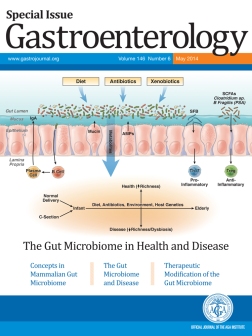
Everything you ever wanted to know about the pancreas, its development and function, and the pathogenesis and treatment of its disorders are now covered in a special issue of Gastroenterology.

Cover-13th issue 13

Pancreatology is a rapidly developing field—recent findings from molecular and genetic studies are being developed into new treatment strategies. To update readers on the latest findings, as well as provide them with a historical perspective of the field, Gastroenterology presents The Pancreas: Biology, Diseases, and Therapy. The issue contains 17 review and commentary articles written by leading experts in pancretology research, covering everything from the basic biology of the pancreas to pancreatic disorders and therapeutic strategies.

Editors Diane Simeone and Stephen Pandol say that they hope this resource will “inspire our readers not only by knowledge transfer but also in ways that will lead to new discoveries and therapies to improve the lives of patients afflicted with pancreatic disorders”.

Review the full table of contents for the special issue.
The pancreas: biology, diseases and therapy. Gastroenterology 2013;144:1163-1326.

Posted in Basic Science, Practice | Tagged , , , , , , , , , , , | Leave a comment

How Does PSC Lead to IBD?

Many patients with primary sclerosing cholangitis (PSC) also have inflammatory bowel disease (IBD), which becomes more severe after liver transplantation, researchers report in the May issue of Clinical Gastroenterology and Hepatology. These patients might require special immunosuppressive regimens.

PSC is a chronic, cholestatic liver disease that eventually leads to cirrhosis and liver failure, requiring transplantation. Little is known about the pathogenesis of PSC, but 70%–80% of patients also have IBD, so immune dysregulation and loss of tolerance to gut bacteria could be involved.

PSC-associated IBD is phenotypically different from IBD in patients without liver disease, with an increased frequency of pancolitis, rectal sparing, and backwash ileitis, and a milder clinical course of colitis. Patients with PSC-associated IBD have a greater risk for colorectal neoplasia than patients with only IBD, and their risk increases even further after liver transplantation.

Kristin Kaasen Jørgensen et al. investigated whether differences in IBD activity after liver transplantation were affected by immunosuppressive regimens or other factors related to the transplantation. They used a Nordic liver transplant registry to follow 439 patients with PSC who underwent liver transplantation (353 had IBD at the time of transplantation), and compared patients’ course of IBD before and after liver transplant.

They found that IBD activity either decreased or remained unchanged in 60% of patients after liver transplantation, but worsened in 40% of patients. Patients with worsened disease had increased levels of colon inflammation, number of relapses, overall IBD activity, and risk of colectomy.

Dual immunosuppressive therapy with tacrolimus and mycophenolate mofetil (MMF) was associated with increased IBD activity after transplant, whereas the combination of cyclosporine A and azathioprine appeared to protect against IBD.

Ten of 11 patients who developed de novo IBD had received tacrolimus after liver transplantation. The authors were surprised to find this association, because tacrolimus is a well-established treatment for IBD.

In an editorial that accompanies the article, Udayakumar Navaneethan and Bret A. Lashner propose that tacrolimus could increase intestinal permeability and endotoxemia to induce an inflammatory response. Alternatively, tacrolimus might reduce T-cell apoptosis to a greater extent than cyclosporine to promote colon inflammation.

Jørgensen et al. say that it is difficult to determine whether the association with deteriorated IBD activity after liver transplantation was caused by tacrolimus, MMF, or by synergistic effects of the combination therapy.

Nonetheless, Navaneethan and Lashner conclude that patients with PSC-IBD need careful and regular follow-up evaluation and monitoring for IBD after liver transplantation—every subsequent visit should include questions about bowel symptoms. Patients also require yearly follow-up surveillance colonoscopy for colon neoplasia—even in patients with no disease activity.

Navaneethan and Lashner state that physicians should consider the use of a tacrolimus-free immunosuppressive regimens for patients with IBD at the time of liver transplantation. Further studies are needed to determine whether cyclosporine or sirolimus with MMF could be used safely without affecting graft rejection and exacerbating IBD activity.

More Information on PSC

Read the article online.
Jørgensen KK, Lindström L, Cvancarova M, et al. Immunosuppression after liver transplantation for primary sclerosing cholangitis influences activity of inflammatory bowel disease. Clin Gastroenterol Hepatol 2013;11:517–523.

Read the accompanying editorial.
Navaneethan U, Lashner BA. Effects of immunosuppression and liver transplantation on inflammatory bowel disease in patients with primary sclerosing cholangitis. Clin Gastroenterol Hepatol 2013;11:524-525.

Posted in Basic Science, Practice | Tagged , , , , , , , , , , , , , , | Leave a comment

Fishing for Genes that Cause Biliary Atresia

A study of zebrafish has helped identify a susceptibility gene for biliary atresia, as reported in the May issue of Gastroenterology.

Biliary atresia is a progressive fibro-inflammatory disorder of infants that involves the extrahepatic and intrahepatic biliary tree and causes obliteration of the ducts, leading to cholestasis, fibrosis, and cirrhosis. If uncorrected, it causes death within the first 2 years of life.

The causes of this disease are unknown, but are believed to involve exposure of a genetically susceptible individual to specific environmental factors.

Biliary atresia occurs exclusively in neonates, so variants of genes expressed during hepatobiliary development could affect susceptibility. Genome-wide association studies previously identified a region of interest at 2q37.

Shuang Cui et al. took a closer look at the chromosome region, searching for copy number variants that were increased among 61 children with the disease, compared with 5088 healthy individuals.

They found that the patients had a significant increase in deletions at 2q37.3 that resulted in deletion of one copy of GPC1. This gene encodes glypican 1—a heparan sulfate proteoglycan that regulates hepatogenesis, Hedgehog signaling, and inflammation.

To learn how deletion of GPC1 could affect biliary development, they reduced its expression in zebrafish. Zebrafish are useful for studying development—embryos develop rapidly ex utero, and their hepatobiliary development and anatomy are similar to those of mammals. By 5 days after fertilization, the zebrafish liver has distinct hepatocytes and cholangiocytes, with an interconnecting duct network. Organs in embryonic zebrafish can be imaged in vivo, and gene expression can be reduced using morpholino antisense oligonucleotide-mediated knockdown techniques.

Cui et al. found that knockdown of gpc1 in developing zebrafish led to intrahepatic biliary and gallbladder defects, observed at the late larval stage (5 days after fertilization). During normal embryogenesis, zebrafish at this stage have developed intrahepatic main ducts, interconnecting branches, and terminal ductules. The knockdown fish had fewer cholangiocytes, resulting in a less complex architecture than controls (see below figure).

Gpc1 knockdown zebrafish (gpc MO) have a decreased number and complexity of ducts, compared with controls. Cells are indicated by white dots.

Gpc1 knockdown zebrafish (gpc MO) have a decreased number and complexity of ducts, compared with controls. Cells are indicated by white dots.

Bile secretion was also significantly reduced in gpc1 knockdown fish.

Activity of the signaling protein Hedgehog is increased in patients with biliary atresia, and GPCs are known to regulate its activity. Cui et al. compared expression of genes known to be regulated by Hedgehog (gli2a, ptch1, floxl1, znf697, and ccnd1), and found it to be increased in livers from gpc1 knockout embryos.

Exposure of the gpc1 knockout fish to cyclopamine, a Hedgehog antagonist, partially reversed the biliary defects. On the other hand, injection a Hedgehog ligand led to biliary defects similar to those of the gpc1 knockdowns.

The authors propose that these findings are consistent with a model in which glypicans modulate Hedgehog activity by acting as a sink, decreasing the availability of ligand—the absence of glypican increases Hedgehog signaling.

Cui also found that liver samples from patients with BA had reduced levels of apical GPC1 in cholangiocytes, compared with samples from controls.

This is the first study to identify a potential risk gene in patients with biliary atresia and to show functional defects in the biliary system in a model organism. These findings also support a role for Hedgehog signaling in the pathogenesis of BA.

In an editorial that accompanies the article, Alexander Miethke and Stacey Huppert state that Cui et al. have shown that zebrafish are a useful tool to assign biological significance to results of genomic studies.

More Information on Biliary Atresia

Read the article online.
Cui S, Leyva–Vega M, Tsai EA, et al. Evidence from human and zebrafish that gpc1 is a biliary atresia susceptibility gene. Gastroenterology 2013;144:1107−1115.e3.

Read the accompanying editorial.
Miethke AG, Huppert SS. Fishing for biliary atresia susceptibility genes. Gastroenterology 2013;144:878−881.

Posted in Basic Science | Tagged , , , , , , , , , | Leave a comment

Are Patients Who Take Continuous NSAIDs Receiving Gastroprotection?

Among patients who continuously take nonsteroidal anti-inflammatory drugs (NSAIDs), a third of co-prescriptions for drugs to prevent gastrointestinal (GI) damage are not renewed within the next 2 years. This discontinuation increases patients’ risk of stomach pain, inflammation, or ulcers, according to the May issue of Clinical Gastroenterology and Hepatology.

Patients with risk factors for GI disorders who continuously take NSAIDs (such as diclofenac, ketoprofen, piroxicam, and naproxen) should also take gastroprotective agents, such as a proton pump inhibitor (PPI), according to current guidelines.

However, it is not clear how many physicians continue to prescribe gastroprotective drugs to their patients, or whether stopping the prescription increases GI complications.

Isabelle Le Ray et al. assessed prescription data from 1856 patients in France who were at risk for GI events and had received prescriptions for an NSAID and PPI, from 2007 to 2009.

They found that about 78% of patients were still being prescribed a PPI along with an NSAID after 1 year, but only about 68% were still being co-prescribed the PPI after 2 years (see below figure).

Decrease in co-prescription of PPIs with NSAIDs over time.

Decrease in co-prescription of PPIs with NSAIDs over time.

The risk for upper GI injury (gastralgia, gastritis, ulcer) increased by almost 50% among patients that stopped receiving the PPI co-prescription. This finding was consistent with a recent study reporting higher rates of GI adverse events and shorter NSAID treatment among patients who were noncompliant with their PPI therapy.

The patients most likely to no longer receive a prescription for a PPI were those who had switched to a cyclooxygenase (COX)-2–selective inhibitor or nonselective NSAID. This is a concern, because international guidelines recommend co-prescription of a PPI with a COX-2 inhibitor for patients at high risk for GI complications. Women were also more likely to stop receiving a PPI prescription.

Half that patients that stopped receiving a prescription for PPI received it again within 6 months, indicating that the change was unintentional. It could be that these patients reported dyspepsia or another symptoms, such as gastroesophageal reflux, to their doctors.

In an editorial that accompanies the article, Angel Lanas says that failure to renew prescriptions for gastroprotective agents is an important factor to consider in planning strategies to reduce the GI damage induced by NSAIDs.

Le Ray et al. conclude that the increased frequency of GI adverse events among patients without appropriate PPI coverage indicates the need to optimize the PPI prescription procedure. One way that under-prescription might be avoided would be to create a combination pill, which contains an NSAID and a PPI.

Read the article online.
Le Ray I, Barkun AN, Vauzelle–Kervroëdan F, et al. Failure to renew prescriptions for gastroprotective agents to patients on continuous nonsteroidal anti-inflammatory drugs increases rate of upper gastrointestinal injury. Clin Gastroenterol Hepatol 2013;11:499–504.e1.

Read the accompanying editorial.
Lanas A. Compliance with prescriptions of appropriate therapy for NSAID users: is the glass half empty or half full? Clin Gastroenterol Hepatol 2013;11:505–506.

Posted in Practice | Tagged , , , , , , , , , , , , | 1 Comment

Are There Stem Cells in the Esophagus and Stomach?

Researchers have identified potential stem cells in human esophagus and stomach, as well as those in metaplastic esophagus that could lead to esophageal cancer, according to the April issue of Gastroenterology.

Stem cells have been reported to exist in the basal layer of the human esophagus—their progeny are believed to become differentiated in the parabasal and superficial layers. These cells might be isolated and studied to develop new therapies for disorders such as Barrett’s esophagus—a premalignant condition in which the stratified squamous epithelium is replaced by a columnar metaplasia.

However, studies of stem cells in the gastrointestinal tract have been limited by the constraints of experimental systems—it is not clear which models are most relevant to the human gastrointestinal tract, or how they differ among benign, premalignant, and neoplastic tissues.

Qiuwei Pan et al. investigated the existence of uncommitted, slowly cycling cells in esophageal and stomach tissues of patients, tracking cells labeled by 5-iodo-2′-deoxyuridine (IdU). Cells that retain this label for more than 29 days, called label-retaining cells, are believed to be a population of adult stem cells—long-lived, multi-potent cells responsible for the replacement of differentiated cells after injury or insult.

The authors injected IdU into 4 patients undergoing esophageal resection for adenocarcinoma. Tissues were collected 7, 11, 29, and 67 days later, from areas of squamous esophagus, Barrett’s esophagus, Barrett’s-associated dysplasia, esophageal adenocarcinoma, and normal stomach.

Pan et al. found label-retaining cells in the human esophagus and stomach that had many features of stem cells (long lived, slow cycling, uncommitted, and multi-potent).

In normal squamous esophagus, label-retaining cells were detected mainly in the basal layer, which became the exclusive location by 67 days (see below figure).

The normal squamous esophageal epithelium. The  interpapillary basal layer is red, the papillary basal layer is green, the parabasal layer is orange, and the superficial layer is brown.

The normal squamous esophageal epithelium. The interpapillary basal layer is red, the papillary basal layer is green, the parabasal layer is orange, and the superficial layer is brown.

These cells were epithelial (in that they contained cytokeratin) and resided adjacent to clusters of proliferating cells. The authors also calculated the epithelial turnover time of the healthy esophageal mucosa to be approximately 11 days (twice that of the intestine).

In normal stomach, Pan et al. identified LRCs in only the neck of the gastric unit; these cells were also epithelial yet undifferentiated (see below figure).

Label-retaining cells (red) in the stomach co-localize with cytokeratin (green) at 11 days post-infusion, confirming the epithelial nature of these cells.

Label-retaining cells (red) in the stomach co-localize with cytokeratin (green) at 11 days post-infusion, confirming the epithelial nature of these cells.

Barrett’s esophagus forms glandular structures; cells proliferate in the base and further up in the glands and become differentiated toward the surface before being lost in the lumen.

In patients, Pan et al. found label-retaining cells only at the base of the Barrett’s glands, through 67 days after infusion of the label. These cells were epithelial and located near proliferating cells, and did not appear to be committed to any particular lineage. LGR5 mRNA, a previously identified marker of intestinal stem cells, was also found at the base of the Barrett’s glands.

Pan et al. conclude that they have demonstrated the existence of a population of slowly cycling, uncommitted cells in the normal and metaplastic human upper gastrointestinal tract. Further studies of these could lead to new approaches for regenerative medicine, and aid diagnosis and determination of prognosis for patients with Barrett’s esophagus.

Read the article online.
Pan Q, Nicholson AM, Barr H, et al. Identification of lineage-uncommitted, long-lived, label-retaining cells in healthy human esophagus and stomach, and in metaplastic esophagus. Gastroenterology 2013;144:761–770.

Posted in Basic Science | Tagged , , , , , , , , , | Leave a comment

What are the Complications of Weight Loss Surgery?

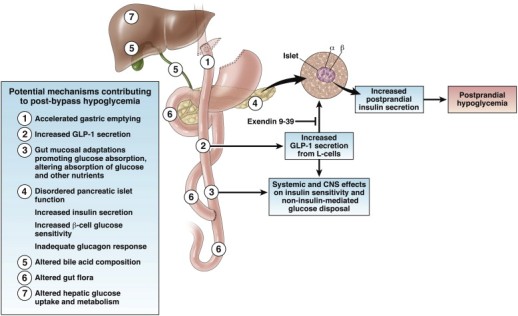
Bariatric surgery is effective treatment for obesity and its related disorders. Yet as increasing numbers of patients undergo this procedure, gastroenterologists encounter a growing number of complications. A Perspective article in the April issue of Clinical Gastroenterology and Hepatology discusses common complications of bariatric surgery and ways to manage them.

Bariatric surgeries include Roux-en-Y gastric bypass (RYGB), laparoscopic adjustable gastric band (LAGB), vertical banded gastroplasty (VBG), sleeve gastrectomy (SG), biliopancreatic diversion, and duodenal switch procedures. RYGB is performed more frequently and leads to an average percent excess weight loss of 56.7%–66.5% in the first 24 months after surgery. Diabetes resolves or improves in 86% of patients, hypertension in 68%, obstructive sleep apnea in 81%, and hyperlipidemia in 97%.

The digestive pathway following RYGB.

The digestive pathway following RYGB.

However, bariatric surgery can cause complications such as nausea, vomiting, and abdominal pain. According to Nitin Kumar and Christopher Thompson, to help patients with these side effects, gastroenterologists must be aware of which surgery the patient received and when it was performed, whether subsequent revisions were performed, and whether certain habits or risk factors could cause the complications. Endoscopic procedures are frequently required to evaluate and treat patients with these complications.

For example, gastrointestinal bleeding occurs more commonly after RYGB (1.9% of cases) than LAGB, SG, or VBG. Bleeding can develop at multiple sites, including the pouch, anastomoses, staple lines, the contiguous small intestine, the excluded stomach, or the bypassed small intestine. Kumar and Thompson explain that if endoscopy is performed, air insufflation should be minimized, and carbon dioxide insufflation should be used. Endoclips can be used to stop the bleeding, in conjunction with epinephrine injection. Electrocautery should be avoided at fresh staple lines.

About 20% of patients who undergo RYGB develop ulcers at the gastrojejunal anastomosis—most frequently in the first 3 months after surgery, but ulcers can develop at any time. Signs of ulcers include epigastric pain, nausea, vomiting, food intolerance, and bleeding.

Kumar and Thompson say that following bariatric surgery, endoscopy can be safely performed to investigate the gastric pouch, gastrojejunal anastomosis, and proximal Roux limb. For patients who have undergone RYGB, anastomotic ulcers should be treated with soluble proton pump inhibitors. Bile reflux can be treated with bile acid binders such as cholestyramine or colestipol. Patients should stop taking non-steroidal anti-inflammatory drugs, if possible, or combine them with proton pump inhibitors.

Endoscopy can be used to identify and treat other complications, such as removing foreign materials and repairing stenosis, leaks, and fistulas. Pancreatic and biliary disorder can be treated with endoscopic ultrasound and endoscopic retrograde cholangiopancreatography.

One of the biggest complications after bariatric surgery is weight regain—approximately 20% of patients have not lost 50% of their excess weight within 1 year of surgery. Furthermore, 30% of patients gain the weight back by 2 years after surgery, and 63.6% within 4 years.

Kumar and Thompson explain that weight regain be caused by neuroendocrine changes in regulation of metabolism that lead to a starvation response, followed by increases in appetite and energy conservation. Decreased satiety can result from loss of restriction; larger pouch size and gastrojejunal anastomosis diameter have been associated with weight regain. Gastrogastric fistula is another possible etiology. Treatment approaches for these problems include endoluminal therapy and endoscopic sutured revision of the dilated gastrojejunal anastomosis and gastric pouch.

As bariatric surgeries increase, Kumar and Thompson emphasize that it is important for gastroenterologists to become familiar with their complications and learn effective methods to address them.

Read the article online.
Kumar N, Thompson CC. Endoscopic management of complications after gastrointestinal weight loss surgery. Clin Gastroenterol Hepatol 2013;11:343–353.

Posted in Practice | Tagged , , , , , , , , , , | 10 Comments

What is Intrahepatic Cholangiocarcinoma?

Researchers have found that intrahepatic cholangiocarcinomas (ICCs) are really 2 different groups of tumors, based on molecular and genetic analyses, reported in the April issue of Gastroenterology. These findings identify class-specific mechanisms of oncogenesis that could lead to new treatment approaches for this common liver cancer.

Cholangiocarcinoma is the second most common type of liver cancer (after hepatocellular carcinoma), accounting for 10%–15% of all primary liver malignancies. Cholangiocarcinoma is clinically classified as intrahepatic cholangiocarcinoma (ICC), which arises from the small bile ducts within the liver, or extrahepatic cholangiocarcinoma (ECC), which arises from the ductal epithelium of the extrahepatic bile duct. These tumors have distinct genetic and histologic features, risk factors, and outcomes. However, the incidence of ICC has increased significantly in recent years, whereas the incidence of ECC has remained stable or even decreased.

Unlike many other solid tumors, no molecular targeted agents have been approved for the treatment of ICCs. There have been few phase III trials to test specific targeted therapies or even chemotherapy regimens in patients with this specific form of liver cancer.

To learn more about the molecular and genetic features of ICCs, Daniela Sia et al. performed gene expression, copy number, and mutational analyses of tumor samples collected from 149 patients.

They identified 2 distinct classes of ICC, based on gene expression patterns and genomic features. The  group they call the ‘inflammation class’ (38% of ICCs) is characterized by activation of inflammatory signaling pathways, overexpression of cytokines, and STAT3 activation. Then, the group they call the ‘proliferation class’ (62%) is characterized by activation of oncogenic signaling pathways (including RAS, mitogen-activated protein kinase, and MET), DNA amplifications at 11q13.2, deletions at 14q22.1, mutations in KRAS and BRAF, and gene expression signatures previously associated with poor outcomes of patients with HCC.

The identification of these 2 classes has raised questions about whether all patients with ICC should receive the same treatment. Sia et al. propose conducting preclinical studies to test different therapeutic agents in models of these ICC classes. For example, multi-kinase inhibitors with a broad spectrum of action could be effective against all ICCs or just a specific subclass (see below figure).

Classification and characterization of ICC, and different treatment strategies for different patients, based on ICC class.

Classification and characterization of ICC, and different treatment strategies for different patients, based on ICC class.

Sorafenib, a small-molecule inhibitor of several tyrosine kinases, is currently used to treat patients with advanced HCC, but has shown marginal activity in patients with cholangiocarcinoma, compared with systemic chemotherapy. However, Siu et al. propose that based on the molecular similarities between the proliferation class of ICCs and the HCC signatures of poor prognosis, along with activation of KRAS, multi-kinase inhibitors such as regorafenib, sorafenib, or sunitinib might be most effective for patients with the proliferation class of ICC. Alternatively, JAK–STAT inhibitors might be more effective for patients with inflammation class of ICC.

Siu et al. remind us that concerns about the liver toxicity of certain drugs in patients with cirrhosis (such as sunitinib for patients with HCC) are less relevant to patients with ICC. ICCs often develop in patients without cirrhosis, and without clear etiologic risk factors or any form of liver disease. In this study, only 17% of patients had cirrhosis.

In an editorial that accompanies the article, Jesper Andersen and Snorri Thorgeirsson agree that the increasing incidence and poor outcomes of patients with ICC, along with the lack of molecular targeted therapies for this neoplasm are major scientific challenges. They state that continued integrative research strategies, to collect multiple layers of data from carefully selected patient cohorts along with comprehensive clinical and pathology information, are needed to advance our understanding of the molecular pathogenesis of ICC and improve design of future trials.

More Information on Cholangiocarcinoma:

Read the article online.
Sia D, Hoshida Y, Villaneuva A, et al. Integrative molecular analysis of intrahepatic cholangiocarcinoma reveals 2 classes that have different outcomes. Gastroenterology 2013;144:829–840.

Read the accompanying editorial.
Andersen JB, Thorgeirsson SS. Genomic decoding of intrahepatic cholangiocarcinoma reveals therapeutic opportunities.Gastroenterology 2013;144:687–690.

Posted in Basic Science | Tagged , , , , , , , , , , , , , | 2 Comments